
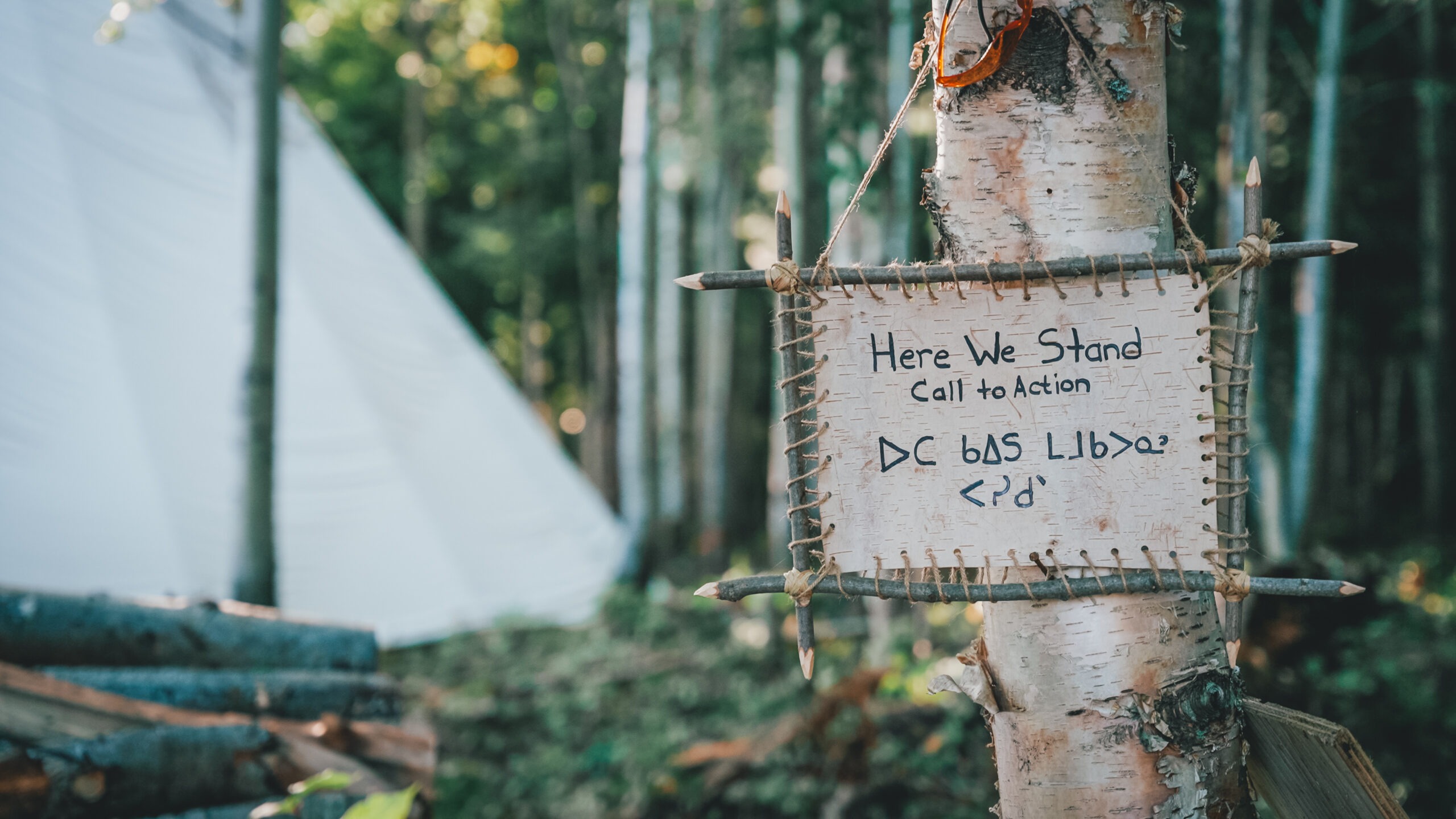
ATTAWAPISKAT, NORTH BAY, TORONTO, ON – A broad coalition of Indigenous land protectors, First Nations and legal experts warn that recently introduced Bill 155: Protect Ontario’s Northern and Rural Communities Act, 2026 will criminalize land protection, exacerbate the over-policing of Indigenous, racialized and marginalized communities and undermine constitutionally protected rights.
Here We Stand, Okiniwak, 8th Fire Rising, Neskantaga First Nation, Friends of the Attawapiskat River, Legal Advocates for Nature’s Defence, the Law Union of Ontario, and the Environmental Justice & Sustainability Clinic at Osgoode Hall Law School collectively call on the Ontario government to immediately withdraw this regressive bill.
Jeronimo Kataquapit, Founder of Here We Stand, said: “We are on the Attawapiskat River, where the Ring of Fire is proposed, exercising our inherent and Treaty rights to be out on the land, as we have since time immemorial. Our joint encampment with Neskantaga is an expression of those rights and our responsibilities to the land and waters. Protecting the land is a responsibility deeply rooted in my family and my community, and one I need to uphold. It’s not just me who’s at stake – it’s the future of all our people, Indigenous and non-Indigenous alike.”
Colleen Moonias, Councillor of Neskantaga First Nation, said: “This is a deliberate attack to undermine our rights and our ways of life. It’s obvious they keep attacking us with legislation so that they can get their way. Everything is moving so fast on purpose, so that it isn’t on our radar. But we will continue voicing our positions as First Nations people, asserting our inherent and Treaty rights and our sovereignty on our homelands. We will not be intimidated. Governments must be reminded that we have a right to free, prior and informed consent.”
Ramon Kataquapit of Okiniwak said: “These bills are really trying to take away our rights as humans. Now we have Bill 155 on top of Bill 140, on top of Bill 5, Bill C-39 and C-5. With each new piece of legislation, we are seeing our rights, our jurisdiction and our ability to have a say in what happens on our lands and waters eroded. Where does it end?”
Michel Koostachin, Founder of the Friends of the Attawapiskat River, said: “Our ancestors agreed to peacefully share the lands. We have our own Natural Laws, and we will continue to exercise our inherent and Treaty rights within our own territory. We have a duty to protect our waters, the land, and the animals. We are not protesters. We are protectors.”
Kerrie Blaise, Founder and Legal Counsel, Legal Advocates for Nature’s Defence, said: “Indigenous land protectors are on the front lines of stopping biodiversity loss and fighting climate change. Instead of ensuring their safety and respecting their inherent and Treaty rights to be present on the land, free from fear of reprisals, Ontario is turning to punitive measures and intimidation. This Bill is neither constitutional nor honourable.”
Irina Ceric, Steering Committee Member of the Law Union of Ontario, said: “Bill 155’s broad and unnecessary prohibition against occupation of public lands threatens Charter-protected rights to expression, peaceful assembly, and access to public land by unhoused persons. The chilling effect of Bill 155 would only exacerbate the criminalization of dissent and over-policing of racialized, Indigenous, and other marginalized communities.”
Dayna Scott, Director, Environmental Justice & Sustainability Clinic, Osgoode Hall Law School said: “Ontario is recklessly ratcheting up the intensity and inviting conflict with land defenders. Instead of taking the care to achieve Indigenous consent to major projects – and being willing to hear ‘no’ when the answer is no – the Premier plans to barge in and break things. But he is only going to bulldoze his way back into court, and all of the expensive delays that come with it.”
– 30 –
- Kerrie Blaise, LAND, kerrie@naturesdefence.ca, 705-978-4034
- Irina Ceric, Law Union of Ontario, irina.ceric@uwindsor.ca, 519-253-3000 ext 2942
Notes to Editors
- Tabled on November 23, 2026 and presently in second reading, Schedule 7 of Bill 155 proposes amendments to the Public Lands Act, introducing new prohibitions against the ‘unauthorized occupation’ of public lands and the obstruction of access by vehicle or boat, alongside expanded investigative and enforcement powers and significant financial penalties.
- Specifically, Bill 155 calls for a new offence under Ontario’s Public Lands Act (PLA) prohibiting occupation of public lands without authorization. A person convicted of unauthorized occupation would be required to rehabilitate the land to the condition it was in before the occupation and face a fine of up to $100,000, plus a maximum of $10,000 per day for continued occupation, a tenfold increase from the current statute.
- The PLA already provides an enforcement mechanism to address the unauthorized possession or occupation of public lands under s. 24(9), yet the province has provided no substantive explanation or justification as to why these existing mechanisms are insufficient or why an additional offence under Schedule 7 of Bill 155 is necessary.
- Bill 155 raises serious constitutional concerns, including potential infringements of freedom of expression and peaceful assembly (sections 2(b) and 2(c) of the Charter) and the right to substantive equality (section 15), given its potential to disproportionately impact Indigenous peoples. The proposed prohibitions also risk infringing Aboriginal and Treaty rights recognized and affirmed under section 35 of the Constitution Act, 1982, including the rights to hunt, fish, trap and maintain a traditional way of life.
- Bill 155’s blanket prohibition against unauthorized occupation of public lands also raises concerns under sections 7 and 15 of the Charter. Rather than addressing the underlying causes of homelessness, the proposed amendments risk further displacing unhoused persons, requiring the removal of shelters and imposing significant financial penalties on individuals who may have no safe or lawful alternative place to live.